
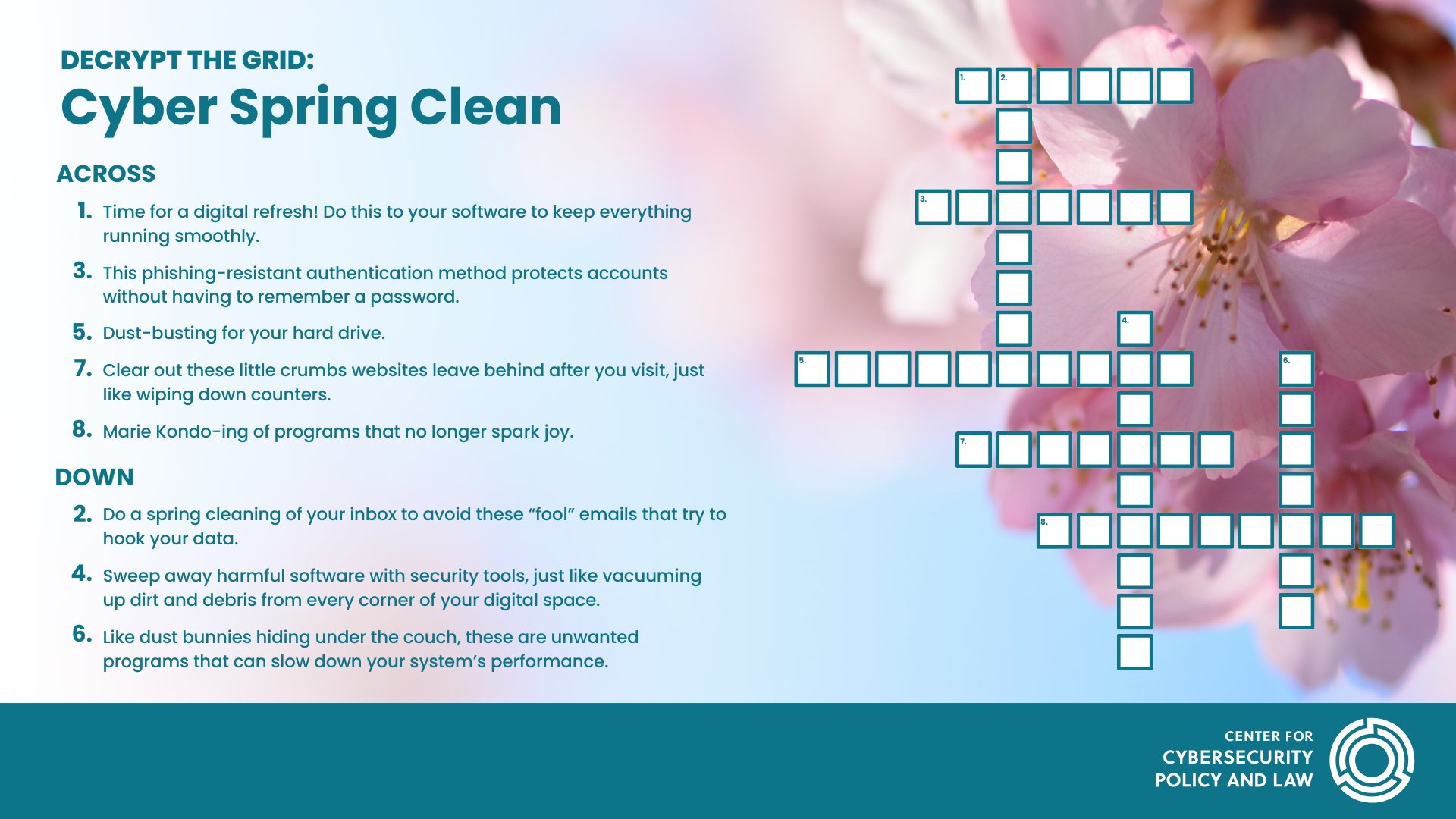
Across:
1. Time for a digital refresh! Do this to your software to keep everything running smoothly.
3. This phishing-resistant authentication method protects accounts without having to remember a password.
5. Dust-busting for your hard drive.
7. Clear out these little crumbs websites leave behind after you visit, just like wiping down counters.
8. Marie Kondo-ing of programs that no longer spark joy.
Down:
2. Do a spring cleaning of your inbox to avoid these “fool” emails that try to hook your data.
4. Sweep away harmful software with security tools, just like vacuuming up dirt and debris from every corner of your digital space.
6. Like dust bunnies hiding under the couch, these are unwanted programs that can slow down your system’s performance.
Read Next
Across the Atlantic, Cyber Policy Is Running Into the Same Terminology Problem
The report covers Europe’s cybersecurity industry, investment landscape, and evolving cyber posture, but it also spends considerable time on a more basic question: what actually counts as “offensive cybersecurity” in the first place?
Before We Discuss Cyber Operations Policy, We Need a Common Language
Governments, private-sector organizations, service providers, researchers, legal experts, and other stakeholders can all play roles in understanding and responding to cyber threats. First they need a shared terminology.
UNGA Takeaways: Digital Sovereignty Without Digital Isolation
A central theme emerged across the conversation: greater digital sovereignty does not have to mean greater digital isolation.

